How to Use a Puppet to Reach the Child Who Shuts Down
Support children from the inside out.
With presence, play, and a puppet
You can reach almost every child. But not all of them.
What if your puppet could help you reach the ones who hold back?
What if your puppet could help you reach the ones who hold back?
You want to support children.
To get things moving.
To help them be themselves.
But some children… don’t let you in.
You do your best.
You listen.
You attune.
You use everything you’ve learned.
And still: There’s a distance.
Invisible, but real.
The answers don’t feel spontaneous.
The behavior is exaggerated - or just out of reach.
And you have no idea why.
You try to break through, but you start to feel more and more powerless.
How do I reach this child?
How do I invite them to join in?
To take a step?
You’re not looking for tricks. You’re looking for trust.
You’re looking for connection. You want to bridge the distance.
The puppet is the bridge
Some distances can’t be crossed with words alone.
They need safety, trust, and a playful invitation - like from a friend who expects nothing from them.
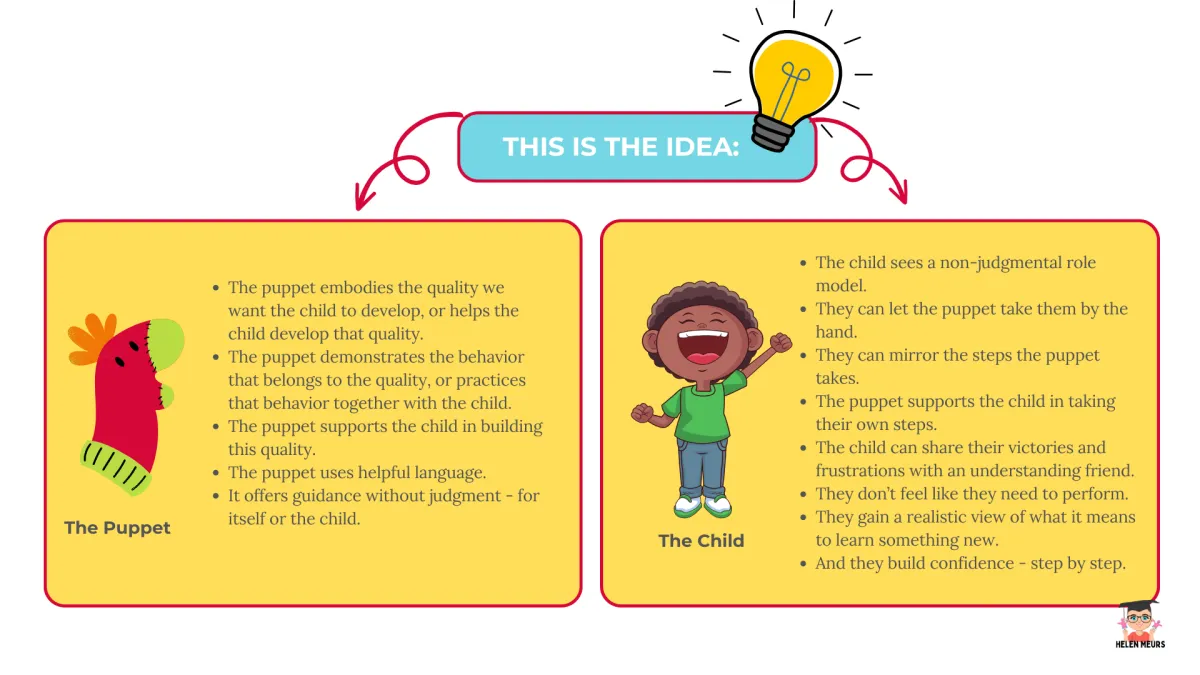
That’s what a puppet can be.
Where you are the adult, the helper, the one who wants something… the puppet is something else.
The puppet is the little friend. A safe third. Different from you. Like the child.
A familiar, playful other – a bridge between two worlds: yours and the child’s.
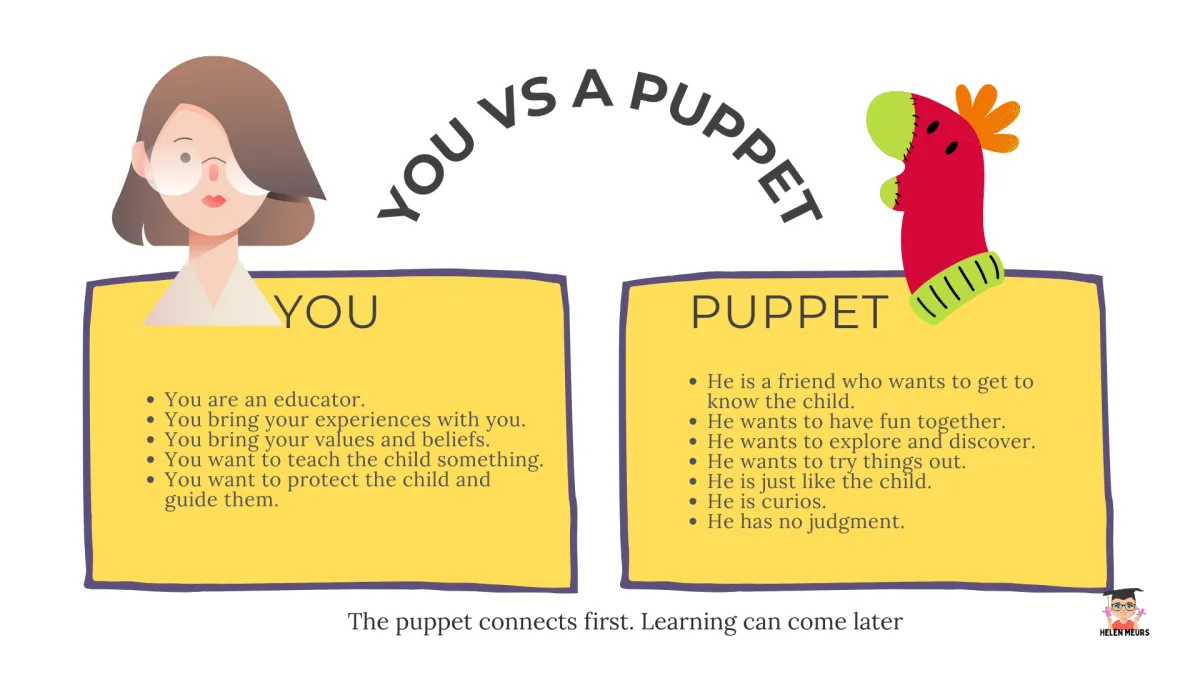
A little friend who:
asks the questions you can’t quite ask,
stands unconditionally on the child’s side,
understands that words can be complicated and play often works better.
A friend without judgment,
without an agenda,
without expectation.
And that’s exactly why it feels safe and makes contact easier.
This is not a performance. Not a trick. Not a gimmick. Not a “fun extra.”
It’s a professional tool that creates space for safety, expression, and connection.
You don’t have to be an actor.
You don’t have to be the playful type.
You only need to discover how this can work.
In your own way.
Presence over perfection
Maybe you’ve already tried something with a puppet. And it felt awkward. Or nothing happened.
Welcome to the club. That’s normal.
Most puppets end up back on the shelf. Not because they don’t work - but because you didn’t have an example.
No framework. No step-by-step path.
You may have even thought:
“I’m just not the type for this.”
But that’s not true. You don’t need to be a “type.”
You just need support, structure, and space to try.
This is for you if…
you work with children who:
speak little, or not at all
struggle with language, focus, or emotional safety
find it hard to trust – or to let you in
And you want more than behavior management. You want real connection.
What changes when you stop performing and start listening?
Imagine if....
Your puppet becomes part of your daily rhythm – not an extra task
You feel calm and ready, knowing when and why to bring it in
Children open up - with longer looks, fuller stories, or sudden giggles
You don’t freeze anymore – because you have a plan and freedom
That one child – the one who never looked up – suddenly answers your puppet instead of you
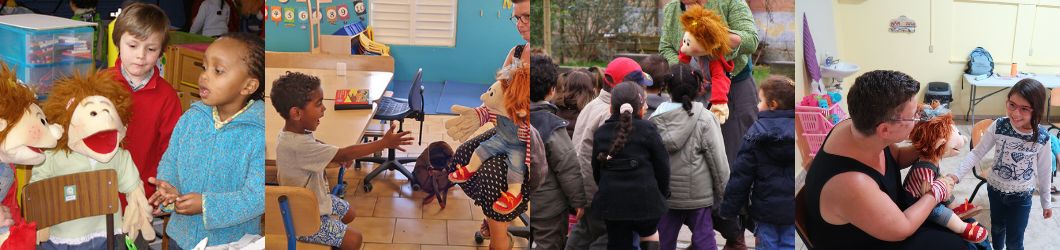
I’m Helen Meurs - and this is the work I do
I’m a former teacher from the Netherlands, and now an international trainer, speaker,
and developer of Relational Puppetry - a method that helps professionals use a puppet as a bridge to emotional connection.
For over 20 years, I’ve coached thousands of teachers, therapists, caregivers,
and child professionals in how to bring puppets into their real work - as a relational tool.
What I teach connects insights from:
relationship-based practice
trauma-informed support
social-emotional learning
whole-child development
And I help you transform these principles through the puppet
into real moments with real children, in your real work.
You don’t need drama skills or a big imagination. You only need two things:
curiosity about the child
a willingness to build a bridge
Everything else can be learned.
Let’s get started
You don’t need to master everything before you begin.
You just need a way in.
And sometimes, that way in… is soft, silly, and wears a little hat.
If you're ready to learn how this can work in your professional practice, I have something for you:
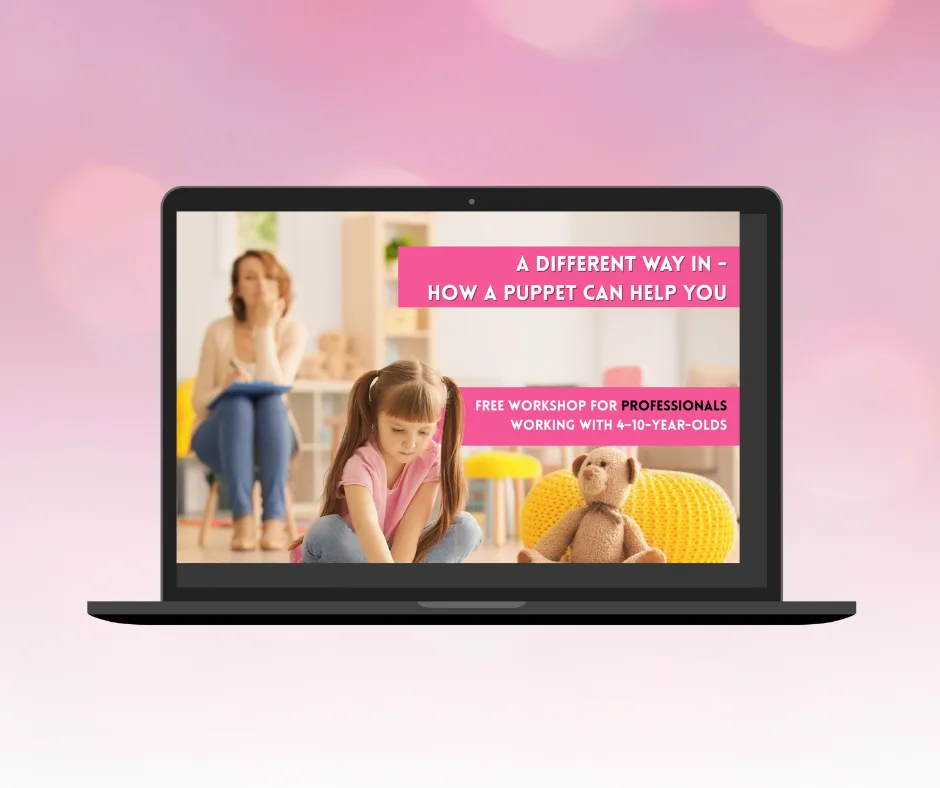
Free Workshop
Creating a Doorway that Invites and Activates
Discover how a puppet becomes a safe, playful entry point - doing what words and questions often can’t. No pressure, just connection.
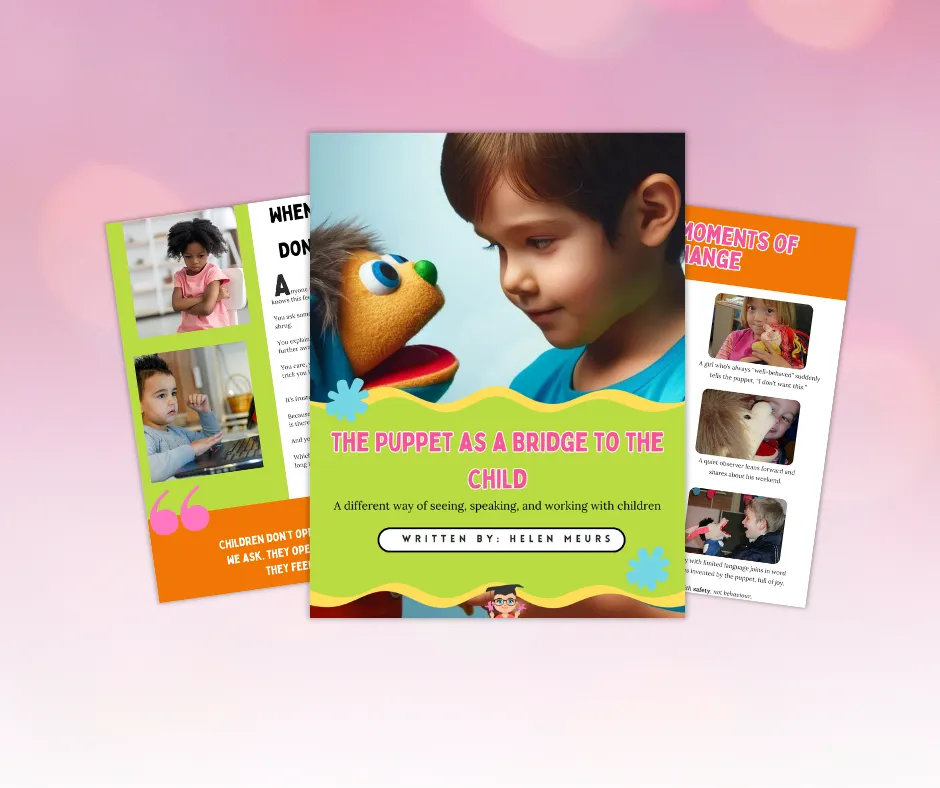
Magazine
The Puppet as a Bridge to the Child
Learn a new way of seeing, speaking, and working with children. This guide helps you understand how the puppet opens emotional doors - without force or pressure.
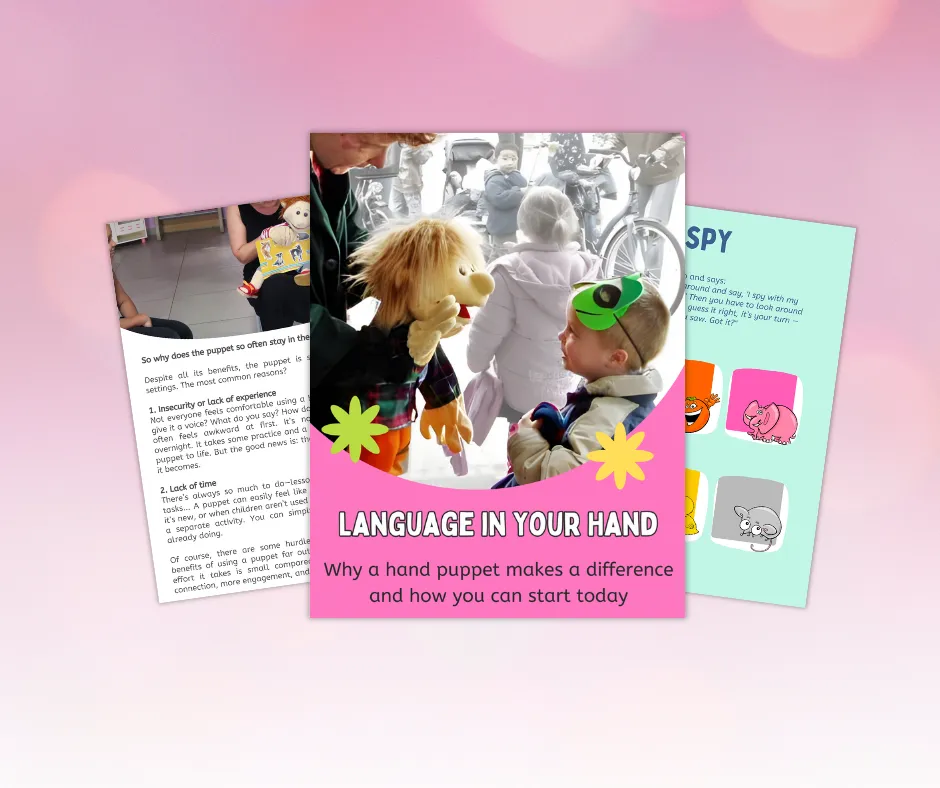
E-book
Language in Your Hand
A practical introduction to using a hand puppet to support language development. Gentle ways to start - even if you’ve never used a puppet before.